Advertisement

Advertisement

cervical spine

Cervicogenic Headaches: Practical Considerations for Prevention, Diagnosis, and Management in Primary Care

Teaser: 

Kathryn McIntosh, MD, PhD, PGY-1 Neurosurgery,1 Sean Taylor, MD, FRCPC,2 Sean D Christie, MD, FRCSC,3

1From Departments of Surgery Dalhousie University and Nova Scotia Health
2Assistant Professor, Neurology From Departments of Medicine, Dalhousie University and Nova Scotia Health
3Professor and Head, Neurosurgery From Departments of Surgery, Dalhousie University and Nova Scotia Health


CLINICAL TOOLS

Abstract: Treatment-refractory headache results in chronic, function-limiting pain despite multiple trials of preventive and abortive therapies. Among adults evaluated for headache, cervicogenic headache represents an important but relatively uncommon cause of headache, representing 4% of cases, with a female predominance. Identifying cervicogenic headache is clinically significant as it localizes the pain source to the cervical spine, guiding targeted, spine-focused management and avoiding ineffective treatments and unnecessary investigations.
As interest and evidence expand, there is a greater need to translate current knowledge into practical guidelines. We highlight the most current evidence regarding prevention, diagnosis and management of cervicogenic headache.
Key Words: Cervicogenic headache, neck pain, unilateral headache, cervical spine.

Members of the College of Family Physicians of Canada may claim MAINPRO-M2 Credits for this unaccredited educational program.

www.cfpc.ca/Mainpro_M2

You can take quizzes without subscribing; however, your results will not be stored. Subscribers will have access to their quiz results for future reference.

Cervicogenic headaches are secondary headaches that originate from pathology in the upper cervical spine for which headache relief can be achieved through spine-focused therapy.
Prevention of cervicogenic headache involves addressing modifiable factors that support spinal health, including smoking cessation, regular physical activity, maintaining a healthy weight and adequate sleep.
Diagnosis of cervicogenic headache is primarily clinical and may be supported by response to targeted cervical interventions, including manual physical therapy or diagnostic nerve blocks.
Treatment of cervicogenic headache is primarily conservative and multimodal, with the strongest evidence supporting manual physical therapy. Radiofrequency ablation may be considered in select cases, evidence for other interventions remains limited.
The cervical flexion–rotation test selectively assesses C1–C2 mobility and is a quick, low-risk bedside maneuver. Marked asymmetry or reproduction of the patient’s familiar headache during the test strongly supports an upper cervical pain generator.
While not diagnostic, reproduction of a patient’s headache with firm palpation or sustained pressure over the upper cervical spine or suboccipital region can support a cervical source of pain.
Many patients with cervicogenic headache are individuals with prolonged, static neck positions such as smartphone-related neck flexion or “text neck”. A history of neck injury is also common.
To have access to full article that these tools were developed for, please subscribe. The cost to subscribe is $80 USD per year and you will gain full access to all the premium content on www.healthplexus.net, an educational portal, that hosts 1000s of clinical reviews, case studies, educational visual aids and more as well as within the mobile app.

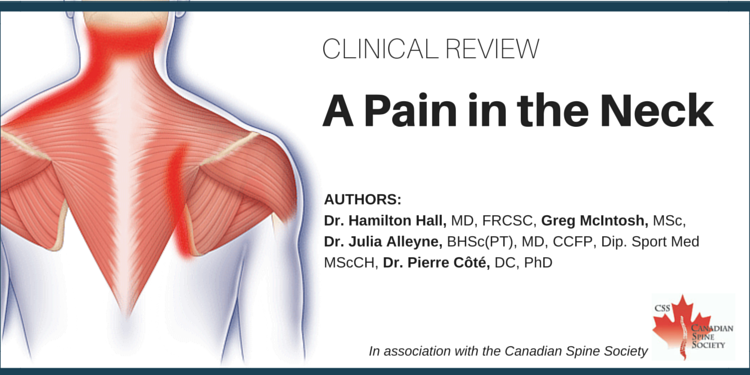
A Pain in the Neck

Image Description
Teaser: 

Dr. Hamilton Hall, MD, FRCSC,1 Greg McIntosh, MSc,2 Dr. Julia Alleyne, BHSc(PT), MD, CCFP, Dip. Sport Med MScCH,3 Dr. Pierre Côté, DC, PhD,4

1Professor, Department of Surgery, University of Toronto. Medical Director, CBI Health Group, Executive Director of the Canadian Spine Society, Toronto, ON.
2Masters in Epidemiology, University of Toronto, Faculty of Medicine. Director of Clinical Research for CBI Health Group and research consultant to the Canadian Spine Society.
3Family Physician practising Sport and Exercise Medicine, Toronto Rehabilitation Institute, University Health Network. Appointed at the University of Toronto, Department of Family and Community Medicine, Associate Clinical Professor.
4Canada Research Chair in Disability Prevention and Rehabilitation; Associate Professor, Faculty of Health Sciences, University of Ontario Institute of Technology (UOIT); Director, UOIT-CMCC Centre for the Study of Disability Prevention and Rehabilitation.
CLINICAL TOOLS

Abstract: Neck pain is common and disabling. Associated with poor posture, sedentary work and stress it is long lasting and recurrent. Most neck pain is mechanical from the structural elements within the cervical spine and can be referred to a number of remote locations. Radicular arm dominant pain is infrequent. Neck pain is diagnosed on history and confirmed with the physical examination. Routine imaging is inappropriate and the Canadian C-spine rules are recommended. Management focuses on education, range of movement exercises with associated postural improvement and strengthening exercises; neck braces should not be used.
Key Words: cervical spine, neck pain, Canadian C-spine rules, range of movement, exercise.

Members of the College of Family Physicians of Canada may claim MAINPRO-M2 Credits for this unaccredited educational program.

www.cfpc.ca/Mainpro_M2

You can take quizzes without subscribing; however, your results will not be stored. Subscribers will have access to their quiz results for future reference.

Most neck pain is benign mechanical pain and serious pathology is uncommon.
Neck pain is longer lasting and more disabling than generally recognized.
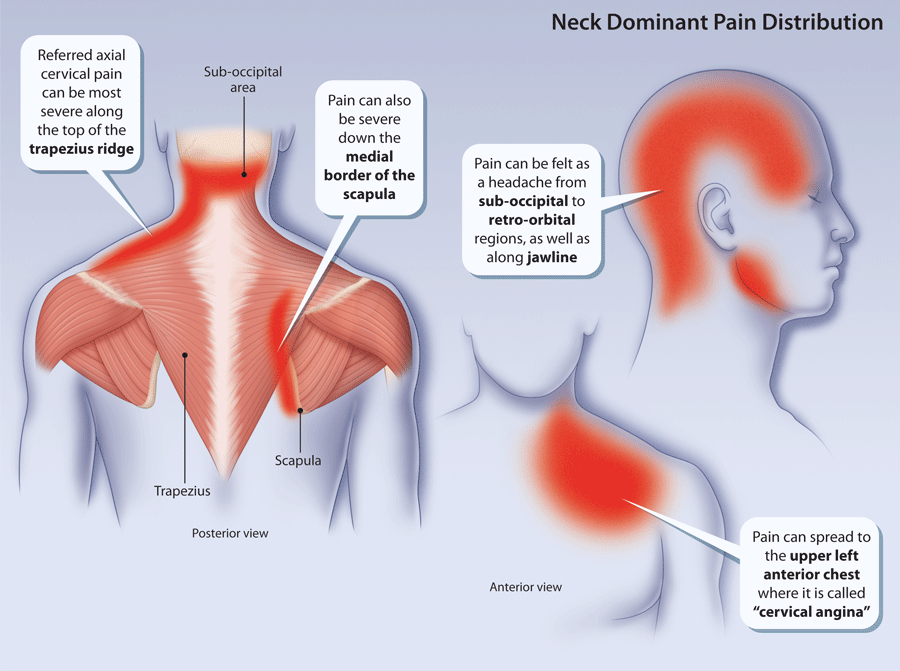
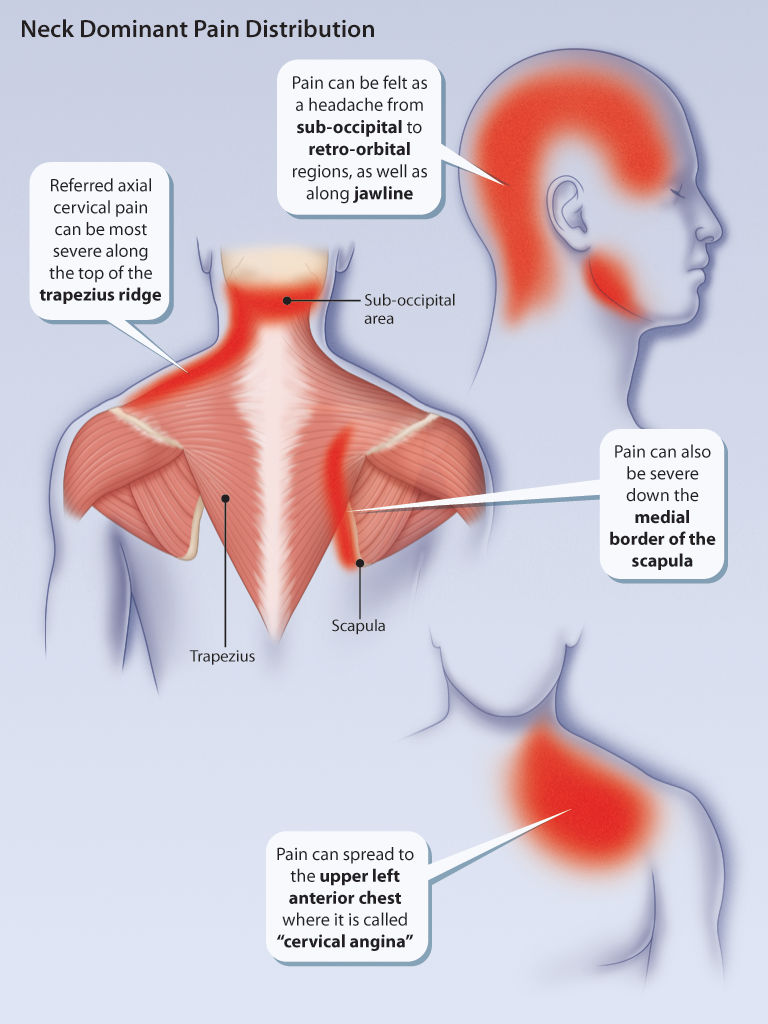
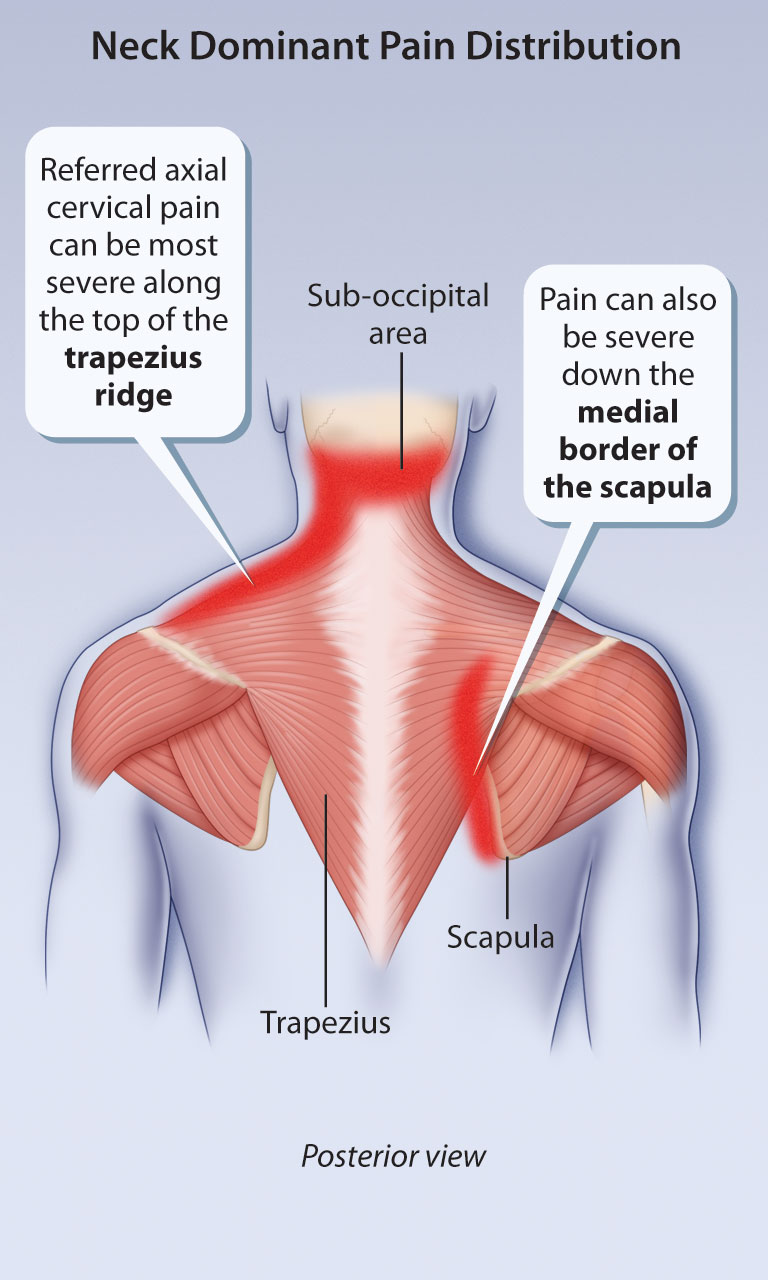
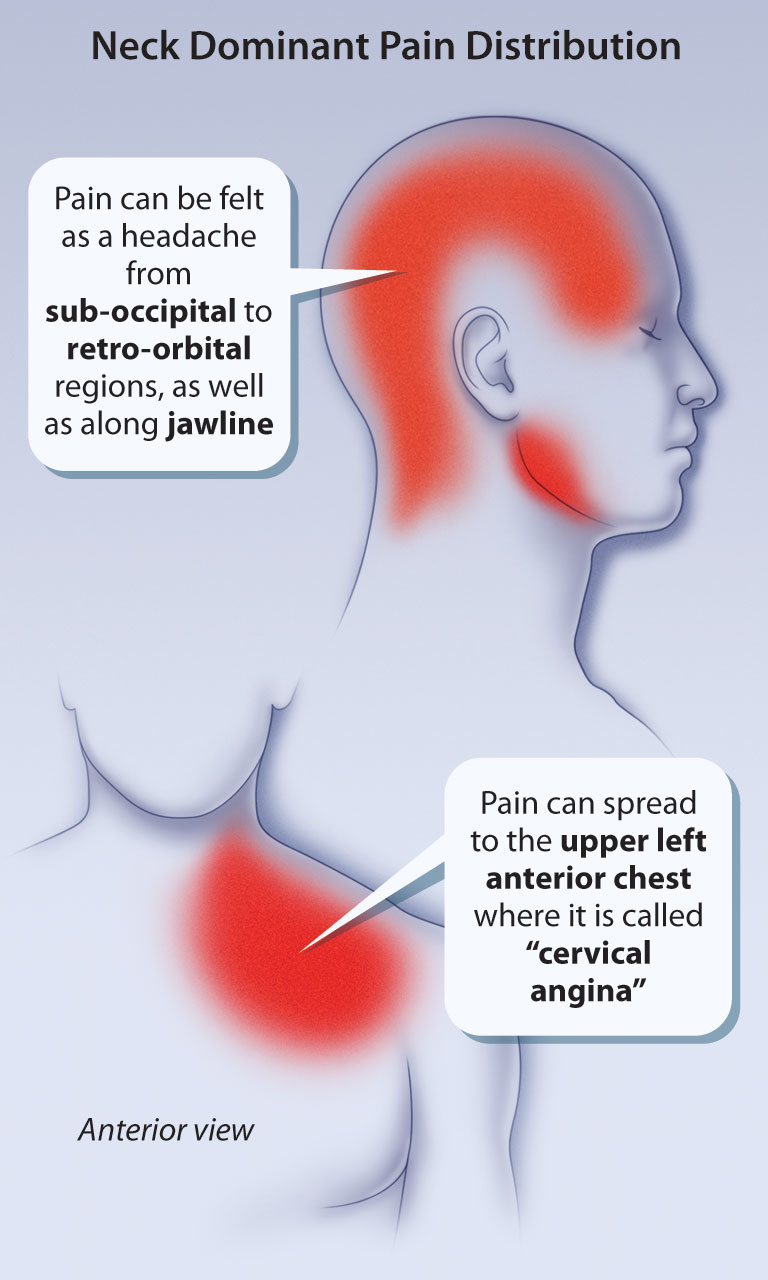
Referred neck pain can be felt on top the shoulders, between the shoulder blades, along the jaw, in the front of the chest and as a headache.
Nerve root involvement is unusual but when it occurs typically affects C5, C6 or C7.
Routine imaging is unproductive.
Management is based on education, range of movement exercises and strengthening.
A careful history to locate the site of the dominant symptoms and a physical examination to assess posture and rule out radiculopathy will identify common mechanical neck pain.
The need for an x-ray should be based on the Canadian C spine rules.
Improving mechanical neck pain starts with educating the patient about the favourable prognosis and increasing the range of neck movement: a cervical collar is contraindicated.
To have access to full article that these tools were developed for, please subscribe. The cost to subscribe is $80 USD per year and you will gain full access to all the premium content on www.healthplexus.net, an educational portal, that hosts 1000s of clinical reviews, case studies, educational visual aids and more as well as within the mobile app.