1 Faculty of Medicine, University of British Columbia, Vancouver, British Columbia, Canada. 2Department of Pediatrics, Department of Dermatology and Skin Sciences, University of British Columbia, Vancouver, British Columbia, Canada.
Abstract: Psoriasis is a chronic inflammatory skin disease that affects up to 1.4% of children (aged <18 years) with a strong genetic predisposition and is mediated by dysregulation in the crosstalk between the innate and adaptive immune responses. It can have significant impact on quality of life for many patients. There are various subtypes of psoriasis with plaque psoriasis being the most common presentation in both adults and children. Pediatric psoriasis is primarily a clinical diagnosis. With the advent of biologics, the treatment landscape for pediatric psoriasis has shifted and encompasses diverse modalities of therapeutics, including topical and systemic treatments, as well as phototherapy.
You can take quizzes without subscribing; however, your results will not be stored. Subscribers will have access to their quiz results for future reference.
Psoriasis affects the pediatric population and is associated with negative effects on quality of life and psychological impairments.
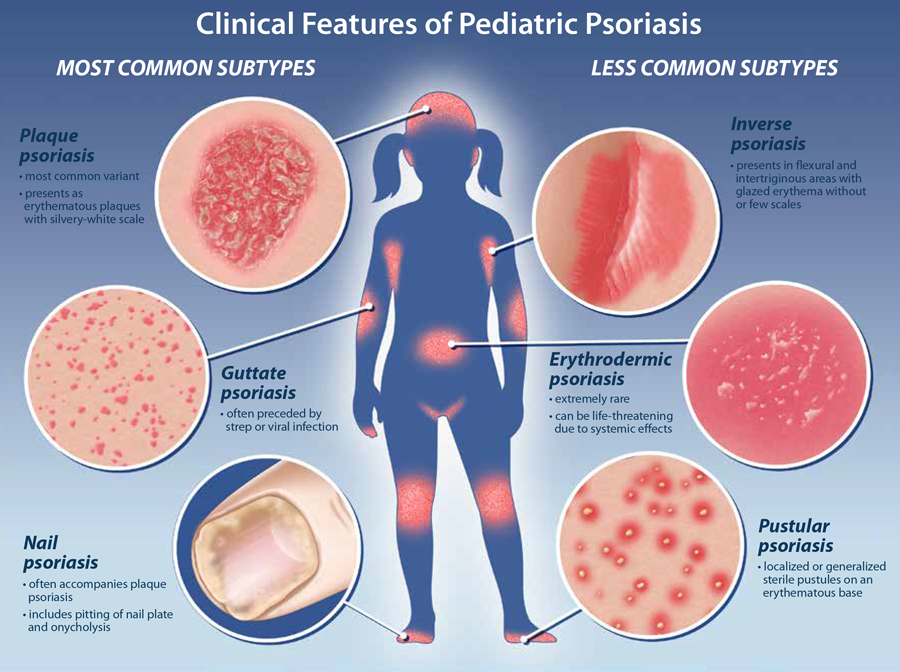
Lesions of pediatric plaque psoriasis may be thinner, smaller, more macerated than those classically in adult and present more commonly on the scalp, face, intertriginous areas, and extremities (flexural surfaces for younger children and extensor surfaces for older children).
Psoriasis is not an isolated condition and is correlated with higher rates of myocardial infarction, diabetes mellitus, hypertension, obesity, arthritis and liver disease.
In mild to moderate cases of psoriasis, topical therapies with a short course of corticosteroids and/or vitamin D analogue are first-line. In moderate to severe cases, narrowband UVB phototherapy, systemic agents, such as methotrexate, and biologics should be considered.
Pediatric patient should be assessed for risk factors for associated comorbidities.
A history of preceding streptococcal or viral infection can be suggestive of guttate psoriasis, which is more common in children than adults.
Approach to treatment should be guided by the extent and severity of disease, which can be quantified by BSA, the PASI score and quality of life index surveys.
To have access to full article that these tools were developed for, please subscribe. The cost to subscribe is $80 USD per year and you will gain full access to all the premium content on www.healthplexus.net, an educational portal, that hosts 1000s of clinical reviews, case studies, educational visual aids and more as well as within the mobile app.