WHAT IS UC?

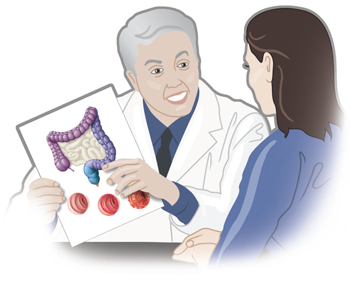
Ulcerative colitis (UC) is a chronic relapsing and remitting inflammatory condition of the large intestine. (Inflammation is a localized protective reaction of tissue to irritation, injury, or infection.
It is characterized by pain, redness, swelling, and sometimes loss of function.)
Ulcerative means a loss of the surface lining, and colitis means inflammation of that lining or mucosa. The inflammation is caused by an abnormal invasion of white blood cells into the mucosa. The exact cause of this attack is not known, but it is thought that a combination of genetic and environmental factors causes the immune system to react aggressively against the normal bacteria that inhabit the colon.

WHICH FOODS SHOULD I EAT OR AVOID?

Making changes to your diet can reduce UC symptoms. Keep track of the foods that aggravate
your symptoms ("trigger foods") so that you can avoid them.

WHAT ARE MY TREATMENT OPTIONS?

Maintaining clinical remission is clearly the best way to maintain your quality of life and to avoid hospitalization and the need for surgery.
Therapy is best tailored to the extent of disease (i.e., proctitis, left-sided colitis, or pancolitis).
Speak with your health care provider to learn more about your treatment options.

ARE THE MEDICATIONS FOR UC SAFE?

In general, UC can be managed well with medication and you can live a healthy, normal life. As with all medications, you should have a discussion with your health care provider about what the best treatment option is for you.

CAN UC AFFECT OTHER PARTS OF MY BODY?

Although the colon is the primary site of inflammation, other parts of the body can be affected. Blood loss from the colon can lead to anemia, which often manifests initially as fatigue. Secondary inflammation in other parts of the body including the joints, eyes, skin, and even the liver can occur. This inflammation can also make the blood more likely to clot, making the patient more susceptible to serious clots affecting the legs and lungs. In most cases, control of the inflammation in the colon limits these manifestations, although some of these complications, particularily in the liver and spine, may run a course independent of the severity of the colitis.

HOW WILL HAVING UC AFFECT MY PLANS FOR A FAMILY?

In most cases, male fertility is unaffected by UC, although medications such as sulfasalazine can have some impact on sperm counts. Female fertility is generally not affected by UC.
For more information on fertility and UC, refer to "Living with UC."

WILL I NEED TO BE ADMITTED TO HOSPITAL?

If your symptoms are severe enough (e.g., severe bleeding or dehydration resulting from diarrhea), you may need to be admitted to hospital for a period of time.

WILL HAVING UC LEAD TO COLON CANCER?

Most studies do not suggest that patients with isolated ulcerative proctitis have an increased risk of colorectal cancer (CRC), but patients with proctitis should follow population-based CRC surveillance protocols.
Patients with isolated left-sided UC have a modestly increased risk of CRC that does not usually become significant until the second decade after the onset of symptoms. It is recommended that patients have surveillance colonoscopy at 3-year intervals starting 15 years after diagnosis.

Patients with UC affecting the majority of their colon have an increased lifetime risk of CRC that may be as high as 10–20%. The increase in risk appears to occur late in the first decade after the onset of symptoms. It is recommended that patients with pancolitis undergo initial surveillance colonoscopy 8 years after diagnosis, with a 3-year surveillance interval that may decrease over subsequent decades.

HOW CAN I HELP MY CHILD COPE WITH UC?

The Crohn's and Colitis Foundation of Canada (CCFC)
provides some excellent tips on how to understand your child's illness and help your child cope: http://bit.ly/14c5Y4N
CCFC also provides a pamphlet, "Smoothing the Way,"
available for downloading at: http://bit.ly/10068qb
It addresses topics such as medications, diet and nutrition, helping your child cope, the emotional impact on the family, and dealing with school.

WILL I NEED SURGERY?

Surgical colectomy offers potential control of the disease without need for medication but carries the risk of surgical complications.
It has been estimated that approximately 25% of patients require surgery within 10 years of diagnosis with UC.