Advertisement

Advertisement

Book Reviews

Book Review: Issues in Palliative Care Research

Book Review: Issues in Palliative Care Research

Teaser: 

Editors: Russell K. Portenay and Eduardo Bruera
Publisher: Oxford University Press
Reviewed by: Madhuri Reddy, MD, MSc, FRCPC, Associate Editor.

This text is an evidence-based review of palliative care research and its challenges. Over the last several years, there has been an increasing need for improvements in the scientific basis of palliative care. There is a wide range of types of research in palliative care, including clinical epidemiology, treatment trials, psychosocial research, quality of life studies and systems research. This book examines not only the range of conventional medical interventions, but also a variety of concerns that have mostly been at the periphery, such as ethics, communication and the nature of suffering. The book offers an overview of the most important research issues and includes updated proceedings of a 1998 meeting that focused on research that took place in Washington D.C., at the National Institutes of Health, as well as additional chapters on selected topics.

The book is well organized and is divided into nine sections. The first section focuses on research in the area of pain, and primarily covers methodological issues in the design of pain control clinical trials. It is pointed out that there are many challenges in analgesic trials, including the large placebo effects and difficulty of symptom measurement.

The second section focuses on research on anorexia and gastrointestinal disorders. It reviews information regarding developing, conducting and analysing trials investigating agents for treating cancer-related anorexia/cachexia. Methodological challenges regarding anorexia/ cachexia trials are examined and 10 such trials are reviewed. The final chapter in this section makes the point that little work has been done in the area of anti-emetics, and the author reviews the etiology of emesis and the research that has been published to date.

The third section examines respiratory symptoms research, with a focus on the multidimensional assessment of dyspnea. Because dyspnea is not a single sensation, it is challenging to measure quantitatively. The author reviews some qualitative measures of dyspnea (e.g., visual analogue scale, Likert scales) as well as quality of life instruments. Another chapter in this section reviews research into nonpharmacological interventions for dyspnea. The fourth section looks at research in fatigue/asthenia. It discusses fatigue measurement and causes (e.g., anemia, anxiety, depression) and reviews various interventions and treatments. There is significant discussion surrounding the evaluation of the causal relationships between fatigue and psychiatric symptoms in cancer patients and the respective treatment implications. The fifth section examines neuropsychiatric and psychosocial research. It discusses the undertreatment of depression in the terminally ill, as well as the challenges of quantitative and qualitative measurement of depression.

The sixth and seventh sections inspect quality of life research, including an assessment of decision making capacity and end of life care. The author reviews the medical literature on patient utility, cost utility and effectiveness of using Medline. He reviews the studies defining patient and family member quality of life as well as instruments used to measure quality of life. The chapters on decision making capacity and advance care planning are probably the most useful for physicians involved in geriatrics and care of the elderly research. Even though there is a focus on cancer research, the frequency of cognitive impairment, particularly delirium, in the final days and months of life is also discussed.

The next section examines research in practice change and reviews the barriers to and opportunities for changing end of life care within the medical school environment, as well as in hospitals and cancer centres. The ninth and final section examines research issues in special populations, particularly pediatric palliative care and HIV/AIDS.

Throughout “Issues in Palliative Care Research”, there is little reference to palliative care of older patients, as the book focuses mostly on cancer palliative care. Even the “special population” sections do not include the older population. However, this is doubtless a testament to the paucity of research in this area rather than an omission by the authors. This book is a must for any researcher in the palliative care field. For the rest of us, it is an excellent reference and review of current palliative care research, and the possible future directions of such research.

Storytelling Brings Truth to Aging Matters

Storytelling Brings Truth to Aging Matters

Teaser: 

A. Mark Clarfield, MD, FRCPC, Dept. of Geriatrics, Soroka Hospital, Ben Gurion University of the Negev, Beer Sheva, Israel.

Most of us enjoy stories. They instruct, inform, involve and, above all, entertain. Who cannot remember sitting on a parent's lap listening to one. For those of us with enough mild cognitive impairment to cloud recollections of our own youth, surely we can see how much our children and grandchildren appreciate a good yarn. The telling of tales goes beyond the Brothers Grimm, television and the movies, full of (usually awful) stories that continue to attract our attention and empty our wallets.

In medicine, "the narrative" also has great appeal. We take a patient's history, after all, and we have long been told by Sir William Osler that if we let the patient tell us her story, we will come to diagnosis sooner rather than later.

The journals also have caught on to storytelling. The British Medical Journal, Annals of Internal Medicine, Canadian Medical Association Journal and Journal of American Medical Association each offer, respectively, a "Personal Column", "On Being a Doctor", "A Room With a View" and "A Piece of My Mind" in every issue. Of the big five, only the New England Journal of Medicine is still too grey to offer such a column.

Novels also have dealt with medical and doctor-related themes: Thomas Mann explored tuberculosis in "The Magic Mountain", Sinclair Lewis the life of the physician in "Arrowsmith" while Samuel Shem's "House of God" caricatured the life and loves of the harried and harassed house staff. In our field of geriatrics there have been only a few gems. In "The Stone Angel", for example, Margaret Laurence tells the tale from the perspective of an 90-year-old woman.

One of the best books addressing the theme of aging that I have read in many years came off of the pen of Canadian writer Rohinton Mistry. His most recent endeavor, "Family Matters", addresses the many issues of aging through the device of a mildly dysfunctional lower-middle class unit in Bombay. Just shy of 80, the protagonist, Nariman Vakeel, is a Parsi widower and a somewhat powerless patriarch of the family. As long as he is healthy, his stepdaughter Coomy agrees to look after him, not altogether distinterestedly, given that she lives in his house. However, while healthy he really needs very little care.

That being said, Coomy, a most embittered woman, worries constantly lest he fall and do himself an injury. His biological daughter, Roxana, a much sweeter person than her older stepsister, tries to avoid conflicts over their shared pater familias.

"I can't believe my eyes."
"What is it, wrong colour?" asked Roxana, for her sister was superstitious about such things.
"Think for a moment," said Coomy. "What are you giving, and to whom? A walking stick? To Pappa."
"He likes to take walks," said Yezad. [Roxana's husband]. "It'll be useful".
"We don't want him to take walks! He has osteoporosis, Parkinson's disease, hypotension--a walking medical dictionary!"1

All is stable until the old man, suffering from the abovementioned diseases but with absolutely no cognitive impairment, falls and breaks his ankle. Here we are let into the world of Indian medicine--harrowing for members of the lower-middle class who cannot afford health insurance and will not stoop to suffer the care under the terrible conditions of the almost non-existent public health service.

Nariman does spend two days at the Parsi General Hospital for a brief admission to have his ankle set and a cast applied. On his first (and only) night in hospital, Mistry describes the old man's thoughts:

He did not mind being alone. The wardboy on the night shift was an older man, much older than the dynamic day fellow. Early sixties at least, thought Nariman, and wondered if his shaking hands were also due to Parkinson's or something else. He made up for the imperfection of his hands with the perfection of his smile. A smile of enlightenment, thought Nariman, so like Voltaire's in old age, in the portrait that graced the frontispiece in his copy of Candide.

And how did one acquire such enlightenment, he wondered, here, in a grim ward, collecting faeces and urine from the beds of the lame and the halt and the diseased? Or were these the necessary conditions? For learning that young or old, rich or poor, we all stank at the other end?2

On returning home, at first Nariman is cared for by Coomy, but she is clearly not up to the task, neither emotionally nor physically. At first, Coomy and her ineffectual brother Jal tried to move Nariman onto a commode whenever necessary. But it is too much for them. A decision is made to utilize a bedpan and urinal which Nariman "… welcomed… as though they were the vessels of salvation."3 Coomy continues to have trouble coping. As she rightly muses, "It was ridiculous… that with so much technology, scientists and engineers still hadn't invented a less disgusting thing than a bedpan. 'Who needs mobile phones and Internet and all that rubbish? How about a high-tech gadget for doing number two in bed?'".3

The book goes on to tell the tale of how difficult it is to nurse an old man at home with a fracture and Parkinson's disease. And yet, in Mistry's India, there seems to be a glaring lack of any kind of formal services. Gerontologists in wealthy North America inform us that up to 90% of the care of the elderly is borne by the "informal sector". If that is true, then in India it must be 99.99%.

The story is indeed a bleak one, although written with great sensitivity, clarity and beauty. From it we learn how lonely illness can be for an older person and how humiliating and frustrating, especially in the face of a profound absence of expert medical and nursing help.

The book also underlines another theme: how difficult it is for the poor of the world, especially in the less developed countries, to cope with the sick elderly. As well, a novel like "Family Matters" illustrates the universality of the challenges and problems of age-related disease, and how the fate of most of the world's elderly, when they do fall sick, is thrust entirely into the willing or not-so-willing hands of an immediate family. In most parts of the world, for the majority of older persons, there is simply no other choice. Through Nariman's story, Mistry lets us in on this not so well kept secret.

Sources

  1. Mistry, R. Family matters. Toronto: McClelland and Stewart Ltd., 2002, p. 32.
  2. Ibid, p. 56.
  3. Ibid, p. 75.

Comprehensive Textbooks of Geriatric Medicine: The Continuing Saga

Comprehensive Textbooks of Geriatric Medicine: The Continuing Saga

Teaser: 

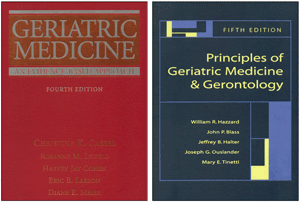
Geriatric Medicine: An Evidence-based Approach. Fourth Edition
Editor: Christine K. Cassel
Springer-Verlag, 2003.

Principles of Geriatric Medicine & Gerontology
Editors: William R. Hazzard, John P. Blass, Jeffrey B. Halter, et al.
McGraw-Hill, 2003.

Reviewed by: Barry Goldlist, MD, FRCPC, FACP, AGSF, Editor in Chief.

In the past three years, Geriatrics & Aging has reviewed the two major British textbooks of Geriatric Medicine. Dr. Shabbir Alibhai reviewed the 2nd edition of the Oxford Textbook of Medicine in our July/August 2000 issue (Vol. 3, No. 6) and Dr. Christopher MacKnight reviewed the 6th edition of Brocklehurst's Textbook of Geriatric Medicine and Gerontology in our June 2003 issue (Vol. 6, No. 6). Both reviews are still available on our website (www.geriatricsandaging.ca).
Unlike the more balanced international contributions of the British texts, the contributors for the texts Geriatric Medicine: An Evidence-based Review and Principles of Geriatric Medicine & Gerontology are overwhelmingly from one country, the United States, and all the editors are American as well. There are several interesting individuals who have contributed to both texts, and one of these is the distinguished Canadian scientist, Paula Rochon. She has co-authored the chapters dealing with drug usage in the elderly for both texts, certainly an indication of her international stature.

Both texts have similar tables of contents, although the order is somewhat different. The opening section of each text is on the basics of gerontology, and both are quite good. Geriatric Medicine benefits from an initial chapter on evidence-based medicine and its specific application to geriatrics, written by Rosanne Leipzig.

Dr. Alibhai would be pleased to note that both of these textbooks have substantial sections on cancer in the elderly. Some of the chapters in both texts, however, read as though they were written for a standard textbook of medicine, and thus do not address the difficult issues in the field, including how representative the trials are, whether frailty was factored in somehow, and whether there is evidence of age discrimination. Fortunately, both books have an introduction to the cancer section by Harvey Jay Cohen that addresses some of these issues in general. Professor Cohen has more space in Principles of Geriatric Medicine & Gerontology, and thus does a better job there.

The various types of dementia are covered in a rather superficial manner in comparison to the last text I reviewed (Clinical Neurology of the Older Adult, July/August 2003, Vol. 6, No. 7, page 65), but this is a more general text. Geriatric Medicine does a better job with Alzheimer disease, but I suspect that Dr. MacKnight would not be impressed by the sections on vascular dementia in either text (it should be noted that he is a well regarded investigator in this area). I personally feel that the area of cholinesterase therapy is a perfect area for the contributor to discuss statistical versus clinical significance, but neither text addresses that issue. Both texts have chapters on delirium authored or co-authored by Dr. Sharon Inouye and are well written, with as much evidence presented as possible.

Principles of Geriatric Medicine & Gerontology is generally more comprehensive than Cassel's text for cardiovascular disorders, but neither is very strong on the management of atrial fibrillation. I feel a geriatrics textbook should be exploring the barriers to anticoagulation as well as patients' perceptions of treatment, and should be including more detail on the exact benefits in various circumstances to better allow the practitioner to counsel her patients. The Hazzard, et al. text has a larger section on cardiac pacing than it does on atrial fibrillation in the elderly. I suspect that few readers of this text will be making pace-maker insertion decisions, but many will be providing full care to patients with atrial fibrillation.

In summary, these are both excellent texts, each with its own blend of strengths and weaknesses. Both are well written with excellent use of tables and figures. I find that Geriatric Medicine: An Evidence-based Review has an easier typeface to read; however, I would be satisfied with owning either of these two texts.

Clinical Neurology of the Older Adult

Clinical Neurology of the Older Adult

Teaser: 

Editors: Joseph L. Sirven, Barbara L. Malamut.
Lippincott Williams & Wilkins, 2002.

Reviewed by: Barry Goldlist, MD, FRCPC, FACP, AGSF, Editor in Chief.

In this era of rapid medical and scientific advances and with the wide availability of information over the Internet, is the medical textbook still relevant? Some of my colleagues, in their book reviews, have attempted to use the text to answer actual clinical questions that arose in their practice during the period they were evaluating the book. While seemingly quite fair, it avoids the more difficult issue of what type of question we should expect any textbook to answer.

Most practising physicians read a medical textbook for three reasons: to aid them in diagnosing medical disorders, to inform them of the course and prognosis of disease, and to give advice on disease management. I will review how this textbook fulfils these three mandates. In general, for this text a group of distinguished experts (all based in the U.S.) carefully review the available evidence for each topic. The current dogma is that we should distrust expert opinion, but value expert evaluation of the current evidence (e.g., Cochrane Collaboration). This text clearly meets this first hurdle, so on to the three general mandates.

1. Diagnosis of Disease
There are two chapters that lay the basis for the normal aging process and the clinical examination: the neurologic examination of the older adult, and cognitive changes associated with normal aging. These are co-authored by the two editors, and are predictably excellent and refreshingly concise. As well, other chapters lay a strong foundation for dealing with older patients (e.g., imaging of the aging brain, diagnostic tests in the older adult). The chapter on age-related pharmacology is one of the best I have ever seen in a non-geriatric medicine text.

With this basic introduction, how does the text perform? I selected two chapters for a more intense review. The chapter on back and neck pain does have the obligatory table on all causes of back and neck pain, but the text is extremely practical. The issue of comorbidity in the elderly is well handled, as is the issue of adverse effects of specific medications (including cost). The algorithm for management is quite reasonable, and eminently practical. Specific physical examination manoeuvres to help in diagnosis are clearly described--a great help to the non-neurologist.

The second disease entity I selected was dementia with Lewy bodies (DLB). To get a full understanding of the disorder requires reading two chapters (diagnostic evaluation and treatment of dementia and; dementia disorders--behavioural and cognitive aspects), which realistically reflect how a physician would approach a patient with cognitive impairment. The differences from Alzheimer disease and other dementing conditions is clearly expressed and the consensus criteria for the clinical diagnosis of DLB are included in an easy to read table. Diagnostic information for the other dementias is similarly easy to retrieve.

2. Course and Prognosis of Disease
After we give our patients their diagnosis, they quite reasonably want to know what the future holds for them. To answer their questions, a physician must know something of the natural history and treated history of the disease. Once again, I selected two common disorders in the elderly, depression and primary brain tumours. The "naturalistic" course of depression is clearly explained, as are the benefits of both treatment and continuous maintenance therapy. There are similarly excellent discussions on the outcome of brain tumours and the benefits (or lack thereof) of various treatment modalities.

3. Management of Disease

This is the most problematic area for all textbooks. The lag between the writing of a text and its publication always results in newer treatment modalities being missed. The real issues, in my opinion, are as follows:

  1. Are non-drug treatments thoroughly discussed (these tend to change more slowly)?
  2. Are the benefits of current therapies clearly quantified and their pathophysiologic base explained, so that when the reader searches for newer treatments she can put the results of journal articles into the proper context?

For this challenge, I reviewed the chapter on movement disorders in the elderly for the treatment of Parkinson's disease. Although details are not given, the importance of multidisciplinary care and exercise is stressed and placed before the section on pharmacotherapy. The various drugs and their rationale are clearly discussed, and an excellent table is available that summerizes the mode of action, usual dose range, common side effects, warnings and contraindications for the most useful medications. A physician reading a current journal article on management of Parkinson's disease in the elderly would easily be able to put the newest therapy into the proper context.

I think it is clear that I consider this an excellent text. It would be extremely useful for a geriatrician or a family physician involved in health care of the elderly. The book is very specific in its focus on the elderly, and does not attempt to replicate an entire neurology text. Because of this, and its excellent section on psychosocial issues in the elderly, I suspect that general neurologists who care for older adults would also find this a useful textbook.

Brocklehurst’s Textbook of Geriatric Medicine and Gerontology, 6th Edition

Brocklehurst’s Textbook of Geriatric Medicine and Gerontology, 6th Edition

Teaser: 

Editors: Raymond C. Tallis and Howard M. Fillit.
Churchill Livingstone, 2003.

Reviewed by: Chris MacKnight, MD, MSc, FRCPC,
Dalhousie University, Halifax, NS.

The world of the geriatric medicine textbook is a crowded one. Why, then, should one choose this text, which claims to be the leader? For the reasons discussed here, I believe that it would be a good choice.

Brocklehurst's is an attractive work, full of figures and pictures, and there is a nice mix of European and North American authors. An innovation since the 5th edition--one that aids readability--is the addition of summary boxes to each chapter, listing the key points of that chapter. This textbook follows the usual order of most texts in the field, with an introductory section on various features of aging, system-specific sections and then chapters on geriatrics and geriatric services worldwide (there are even a few pages on Canada!). One of my criticisms that applies to most of these works is that they are more texts of the internal medicine of old age than of geriatrics, which I see as the care of the frail older adult. This textbook, however, does concentrate on frailty, with almost every chapter at least nodding towards frailty and the older adult, who suffer with multiple comorbidities and disabilities.

Most texts should accomplish two functions: they should provide an introduction to and comprehensive overview of a field for the novice, and provide a resource for the expert. I recently used this text as a resource for the first few patients I saw on March 3, 2003. My first was a home visit to a patient who had had an episode of syncope. Although there was little information provided on home visits (less than in the 5th edition), there was a detailed and up-to-date chapter on syncope by a recognised world leader in the field. The next consultation was on a woman with Diogenes Syndrome, with the inpatient team wondering about her competency to return home. The section on Diogenes Syndrome was much improved from the 5th edition, and very useful. Unfortunately, I could find nothing related to assessing competency, either in the index or after a hand search of the chapters I thought might be relevant. There also is no chapter on legal issues, although this would likely be difficult in an international text.

I then saw a patient with a postoperative delirium and pre-existing vascular dementia. The chapter on vascular dementia is a great improvement over the section in the 5th edition, where it was lumped in with the other dementias. The section on postoperative delirium also was very helpful and lucid, though there was some repetition between the discussion in the chapter on Delirium and that in the chapter on Surgery.

As with all texts, currency is a problem. There are some references to the 21st century, but not many. New issues, such as West Nile Virus, are nowhere to be found. The editors do recognise this limitation, and realise that for up-to-date information they cannot compete with electronic resources. Where they can compete, however, is in offering a comprehensive overview and foundation, and I believe they have succeeded admirably. This text is useful for trainees, libraries and those healthcare professionals who need either an introduction or a refresher to geriatric medicine.

Prostate Cancer: Principles and Practice

Prostate Cancer: Principles and Practice

Teaser: 

Editors: Kantoff P.W., Carroll P.R., D'Amico A.V.
Lippincott Williams & Wilkins, 2001.

Reviewed by: Shabbir M.H. Alibhai, MD, MSc, FRCP(C), Senior Editor, Geriatrics & Aging.

Prostate cancer has been enjoying significant attention in the media over the past few years. Famous individuals such as Health Minister Allan Rock and General Schwartzkopf have been diagnosed and treated in recent years. Much information has been published, in an increasingly compartmentalised and specialised fashion, on the subject in the past decade. This textbook's purpose is to bring together the data from basic science and clinical disciplines in a comprehensive examination of prostate cancer. I should mention at the outset that I have significant research interests in this field, particularly from the geriatric angle, so my perspective on this book may be a little slanted.

To begin with, this reference is written by a host of distinguished American genitourinary oncologists. With very few exceptions, the list of contributors includes the major researchers in the field. Unfortunately, of approximately 100 authors, only two are not American. Thus, a wealth of international (and Canadian) experience in prostate cancer is ignored, and a primarily American perspective on this disease is presented. While this may not be an issue in some fields, in prostate cancer there are significant international differences in thinking with respect to screening, diagnosis and treatment.

The book is organised into eight sections, covering biology, epidemiology, diagnosis, early prostate cancer treatment (two sections), advanced disease (two sections) and future directions. Chapters are generally organised logically, and text and tables are nicely formatted and easy to read. Some chapters have many tables and figures to help facilitate knowledge transfer, whereas others are monotonous and almost exclusively text-based.

The section on biology has some very useful material on anatomy, cellular and molecular biology, genetics and cancer prevention. The anatomy chapter would have been aided by a few diagrams illustrating the anatomy of the prostate in relation to surrounding structures; pity the authors presumed the readers would not find this information useful.

The section on epidemiology is quite interesting. An excellent review of nutritional factors by a world authority includes pertinent sections on vitamins D and E, lycopenes, soy and selenium. However, there is no mention of the ongoing, large SELECT (selenium and vitamin E) randomised prevention trial sponsored by the National Cancer Institute. Peter Albertsen's chapter on age, comorbidity and prostate cancer is particularly relevant to geriatricians and clinical epidemiology-types, such as myself.

Sections 4 and 5, covering single modality and multimodality treatment of localised disease, will be of particular interest to primary care clinicians. There are some useful chapters discussing the role of surgery, external-beam radiotherapy, brachytherapy and combined therapies. One chapter is dedicated to treatment complications such as incontinence and sexual dysfunction, although neither this chapter nor previous ones adequately discuss the risks of treatment complications by modality and patient characteristics. There is also very little discussion of the prevalence of pre-existing incontinence and erectile dysfunction in older adults. This is unfortunate, because both conditions impact upon treatment selection in practice. Moreover, the discussions around treatment do not, in my mind, distinguish the results achieved in specialised tertiary care centres from the average community setting. I found the material on adjuvant hormonal therapy somewhat sparse, given the number of studies published in this area in recent years. I also found the chapter on quality of life long on the theory of quality of life and how to measure it, and short on the actual quality of life after various treatments and complications. This is unfortunate, given the limited evidence in favour of treatment, particularly in older adults, and the major adverse effects of treatment. This is not adequately highlighted.

Chapters in remaining sections cover other interesting areas, including various complications of prostate cancer (hematologic, orthopedic, neurologic), psychosocial issues and a very comprehensive review of pain and symptom management (something with which many clinicians are not very proficient). From an evidence-based medicine perspective, the offerings vary. Some chapters are very careful to discuss the quality and quantity of evidence, whereas others (particularly the chapters on treatment of localised disease) are more cavalier and present the perspectives of expert clinicians with secondary use of studies to justify their positions. Overall, I was disappointed in the offerings, and there was scant mention of several important completed or ongoing clinical trials of management (e.g., the now-published Scandinavian trial of radical prostatectomy vs. watchful waiting and the ongoing PIVOT trial of surgery vs. watchful waiting).

In summary, this textbook will probably be useful to genitourinary specialists (clinicians and researchers) who want quick overviews of specific topics to inform or facilitate more detailed inquiries. Family physicians and general internists should be able to answer most of their questions equally well with a good urology or oncology textbook or a few good review articles on the subject. A stronger focus on methodology (one very good chapter on clinical trials notwithstanding) and evidence-based recommendations would have been an asset. A chapter on informing and empowering patient decision-making also would have been useful, as would a list of Internet-based resources for clinicians and patients. For the generalist, borrowing a copy from your local medical library and waiting for an improved second edition is probably your best bet.

Dementia, Second Edition

Dementia, Second Edition

Teaser: 

Editors: O'Brien J, Ames D, Burns A.
Oxford University Press, 2000.

Reviewed by: Christian Bocti, MD, FRCPC, Cognitive Neurology Unit, Sunnybrook and Women's College Health Sciences Centre, Toronto, ON.

There has been a tremendous increase in the pace of discoveries related to the dementias in the last two decades. For a clinician, it is difficult to keep up with all this new information. Few textbooks on the topic attempt to integrate all fields of knowledge in a comprehensive manner--from basic neurochemistry and neurobiology to clinical approach and neuropsychology, and from pharmacotherapeutic strategies to multidisciplinary management and community services for patients with dementia. Although there are good textbooks available that cover some of these individual aspects, Dementia, Second Edition is the most ambitious textbook presently available, with the many advantages and few drawbacks that such a vast undertaking implies.

The book has 70 chapters (17 more than the first edition) organised in seven parts, which provides a user-friendly structure. There are 133 contributors, mostly from the U.K. but also from continental Europe, North America and Australia. The editors have accomplished a monumental task in coordinating the work of this large number of authors.

General aspects of dementia are reviewed in the first part, which constitutes a full third of this book. Diagnostic criteria for Alzheimer disease (AD), vascular dementia (VaD) and dementia with Lewy bodies (DLB) are discussed, as well as related concepts such as age-associated cognitive decline (AACD). However, the absence of consensus criteria for frontotemporal dementia (FTD) in this section is surprising (they are presented in a later chapter). Clinical aspects of dementia are then presented, including a brief overview of neuropsychology and a more elaborate chapter on neuropsychiatric features. Reflecting the increasing importance of neuroimaging in the differential diagnosis of the dementias, there is a series of chapters that provides a good synthesis of neuroimaging techniques currently in clinical use (CT, SPECT and MRI).

Following, there is an elaborate section on familial, social, cultural and economical aspects of dementia care, as well as a review of services for patients with dementia available in many parts of the world, including developing nations. Most notable are the chapters on sexuality and dementia, and on ethical and legal aspects of dementia care--seldom-discussed issues that can have significant impact on the quality of life of patients.

The second part of the book provides a detailed review of Alzheimer disease, starting with definitions, risk factors and epidemiology. The natural history is described, and the neurobiology section includes very good chapters on the cholinergic system and the neuropathology of AD. Disturbances in other neurotransmitter systems are exposed more succinctly, and genetic factors and even animal models of AD are reviewed in some detail. Therapeutic strategies are presented next, and the use of cholinergic drugs are put in a humbling historical perspective. There also is an extensive review of treatments for behavioural and psychological symptoms, both pharmacological and psychosocial. The chapter on pharmacological approaches provides a well-structured and rational clinical methodology to treating behavioural disorders, with a remarkably comprehensive review of published studies.

The third, fourth and fifth parts of the book cover VaD, DLB and FTD, respectively; all these chapters are written by leaders in the field and provide clear, concise overviews of each entity. Controversial issues, including the importance of leukoaraiosis in cognitive impairment are well discussed. The section on FTD provides good perspective on the different sub-syndromes and clarifies conflicting terminology used by various authors in the literature.

The sixth part briefly reviews neuropsychiatric disorders associated with dementia. The prototypical disorder, Huntington's disease, is well synthesized. There is very little elaboration, however, on dementia in Parkinson's disease. Other chapters provide overviews of cognitive dysfunction in schizophrenia, depression and alcoholism. The inclusion of these chapters in a textbook on dementia is a welcome step forward to a unified conceptualisation of brain-behaviour relationships. The last part provides a brief overview of Creutzfeldt-Jakob disease, HIV-associated dementia and other uncommon dementias.

Overall, this is a comprehensive, authoritative and accessible textbook that anyone involved in the care of patients with dementia will find very useful. It goes well beyond what is found in any other work on dementia, and it presents a good balance of basic science and clinical and psychosocial aspects. In such a wide-ranging text, certain topics are inevitably presented in less detail than others, but globally, this is an excellent textbook. In the decades to come, dementia will become one of the major challenges facing our society and, despite exciting recent developments, there is still much work to be done to meet these challenges.

Psychiatry in the Elderly, 3rd Edition

Psychiatry in the Elderly, 3rd Edition

Teaser: 

Editors: Jacoby R, Oppenheimer C
Reviewed by: Dr. Barry Goldlist, Editor in Chief, Geriatrics & Aging.

This text is the third edition of what has become a standard reference text in geriatric psychiatry. Chapters have been updated, often with new authors, and some sections have been deleted (e.g., chapters on nursing and occupational therapy, specialties that now have texts of their own). The book is divided into four sections: basic science, clinical practice, psychiatric services and specific disorders.

The chapters in the section on basic sciences, although necessarily brief, are all excellent. There is evidence of firm editorial control in the way that each chapter is written, particularly in the uniformly excellent concluding remarks. The editors include typical basic science chapters (biology of aging, cognitive changes with aging, neuropathology, neurochemistry, molecular genetics and biology), but also include chapters on sociology, epidemiology and economics. I believe they are excellent additions to the "basic science" of old age psychiatry. I was particularly impressed by the clear and practical discussion on cognitive changes in old age by Milwain and Iversen.

The section on clinical practice describes the clinical skills required to care for mentally ill elderly patients. There are chapters on psychological assessment, neuroimaging, psychopharmacology, social work with older persons, psychometric assessment, dynamic psychotherapy, family therapy, primary care and liaison psychiatry. The two chapters that interested me the most were the first two in this section: psychiatric and clinical cognitive assessment and physical assessment. The first chapter on psychiatric and clinical cognitive assessment was both comprehensive and practical, even discussing issues such as in which room to interview the patient and those about gaining access. The majority of initial psychiatric consultations for the elderly in the United Kingdom are done in the patient's home, and most urgent cases are seen within 48 hours and non-urgent cases within one week. This strikes me as convincing evidence that the U.K.'s system of care for the elderly is more responsive than the Canadian system. The chapter on physical examination is brief, but does cover all the important geriatric issues and highlights the high yield systems to examine. I admit, I was astounded to read that a physical examination was part of the geriatric psychiatry exam in the U.K.

The third and shortest section, covering psychiatric services for the elderly, includes chapters on principles of service provision, caregivers' lives and designing homes and facilities for the elderly with dementia. The last chapter is replete with excellent diagrams and details on what makes a facility appropriate for an elderly person with dementia.

The final half of the book is "hard core" psychiatry, i.e., discussions on specific disorders (e.g., dementia, manic syndromes) and ethical and medico-legal issues in geriatric psychiatry. The chapters on dementia are detailed and written by renowned experts while the other topics, though covered more briefly, are also well done. The chapter on manic disorders in old age is written by two renowned Canadian geriatric psychiatrists, Ken Shulman and Nathan Herrmann.

In summary, this is an excellent textbook of geriatric psychiatry. Despite being a U.K. publication, there are contributors from Canada, the U.S., Australia, Germany, Sweden and Ireland, and the text is clearly applicable to the care of the elderly with mental disorders in North America. This book would be a worthwhile purchase for any physician who deals with such patients.

Review of “Management of Dementia”

Review of “Management of Dementia”

Teaser: 

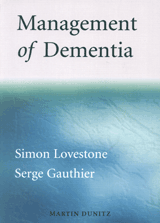
by Simon Lovestone and Serge Gauthier, Martin Dunitz, 2001.

Reviewed by Chris MacKnight, MD, MSc, FRCPC, Assistant Professor, Dalhousie University.

When I was asked to review this book I thought, Not another guide to dementia! I was right--this isn't yet another guide to dementia. It is an excellent, helpful and practical book, and one that I greatly enjoyed.
The authors, Drs. Serge Gauthier and Simon Lovestone, are experienced and respected experts in dementia, and they have distilled that experience into 150 easily read and understood pages. Being from both sides of the Atlantic, they bring a nice trans-continental perspective to the book, and their respect for their patients is evident on every page.

The authors don't get bogged down in the minutiae of pathophysiology and pharmacology, but rather present what a practitioner needs to know to get the job done. They begin with a chapter on the newly diagnosed patient, and follow with chapters on common behavioural problems (including one on sleep), treatment of the cognitive symptoms, the possibility of disease modification and, finally, a chapter on long-term care, including the design of the facility.

There are a number of excellent features in this book. The end section contains many instruments commonly used in assessing and following patients with dementia, complete with guides for their use. I particularly enjoyed the cases, scattered throughout the text, that aptly illustrated the management issues and were very real-life. The references at the end of each chapter are both comprehensive and current.

I highly recommend this book to trainees and clinicians (both physicians and non-physicians) who see patients with dementia. Most nursing homes, if not every nursing home ward, should have a copy on hand. Even a specialist is likely to learn something from these pages. Unlike so many books I see, I believe I'll actually use this one.

Alzheimer’s Disease and Related Disorders Annual 2001

Alzheimer’s Disease and Related Disorders Annual 2001

Teaser: 

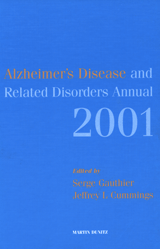
Editors: Gauthier S, Cummings JL

Reviewed by: Dr. Barry Goldlist, Editor in Chief, Geriatrics & Aging.

As is my usual practice when reviewing multi-authored textbooks, I immediately went to the list of contributors to see how representative they were of the broad community of experts. In this book, only two of the contributors are from countries other than the United States. One of these, Dr. Serge Gauthier, the eminent Canadian neuroscientist, also acts as an editor. Despite this relative imbalance, the book is excellent and of value to any physician with an interest in Alzheimer disease. Specialists and researchers will particularly enjoy the cutting-edge scientific chapters, including one on amyloid processing by Dr. Greg Cole, and Dr. Gauthier's thoughtful perspective on the past failures and future prospects of the use of muscarinic agonists in Alzheimer disease. Any physician, whether primary care provider or specialist, could benefit from the chapters on depression in dementia, the use of antipsychotic drugs in dementia and the management of late stage dementia. I was particularly impressed by the scientific rigour of the chapter on assessing competency for treatment consent capacity and financial capacity by Marson and Briggs.

With any such text, the lag between writing the chapter and publication means that the latest information cannot always be included. The same week that I reviewed this book, for example, I read an article in the Archives of Neurology on increased B-secretase activity in the Alzheimer disease brain that potentially contradicted some of the assumptions about disease pathogenesis in the book's first chapter. Although I enjoyed Professor Schelten's scholarly review of neuroimaging in the evaluation of dementia, I am not sure there is Level 1 evidence for his assertion that one MRI examination during the course of a dementia evaluation can hardly be judged to be optional any more.

Despite these minor quibbles, this is an excellent book that can be profitably read by any physician who cares for patients with dementia, particularly of the Alzheimer type.