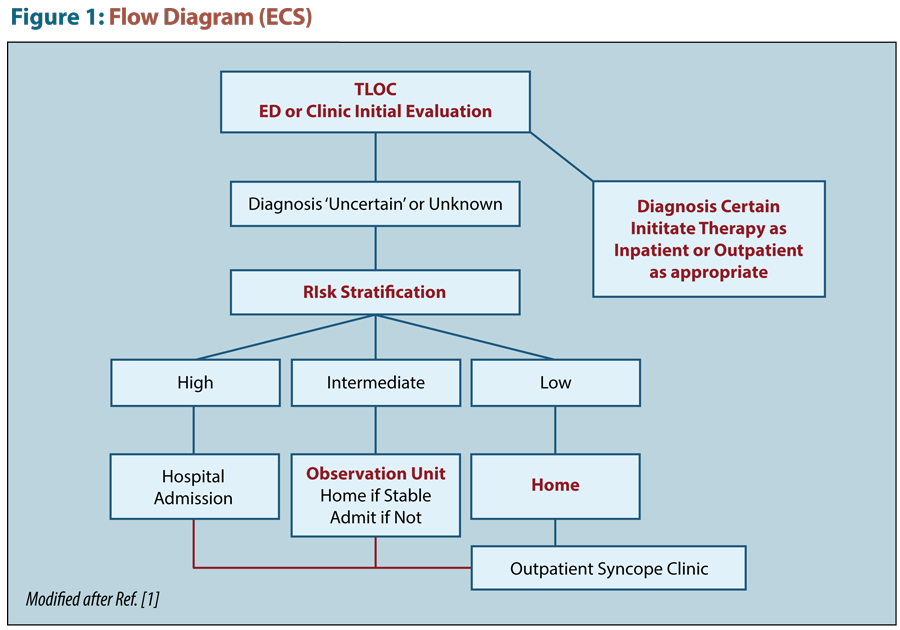
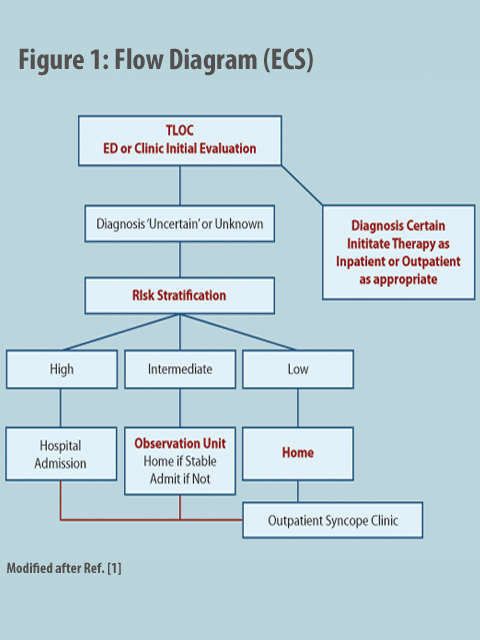
Abstract: Syncope is generally categorized by such known causes as vasovagal syncope, situational syncope, postural syncope, neurologic syncope, postural-orthostatic tachycardia syndrome, and unknown causes. The unknown causes of syncope can be challenging to diagnose and treat since possible causes can range from benign to life-threatening. This article will focus on unknown cases with no evident cause.
Incidents of syncope with unknown origin can be challenging to diagnose and treat since possible causes can range from benign to life-threatening.
One of the challenges associated with diagnosing and treating syncope is the plethora of possible causes.
Concrete guidelines for syncope risk assessment would prove to be an invaluable tool in urgent and emergent care environments as well as in family medicine clinics. A standardized approach to syncope cases with unknown origin will improve patient care immeasurably.
The ability to flag patients who are at high risk for morbidity and mortality, judicial use of diagnostic tools.
In 50 % of patients, the cause of a syncope incident will not be evident; a risk stratification (scoring) system ranging from low to intermediate to high would be beneficial.
No matter whether an incident involving syncope is benign or potentially high risk, any injury sustained should be addressed according to ATLS, ACLS, and PALS guidelines.
To have access to full article that these tools were developed for, please subscribe. The cost to subscribe is $80 USD per year and you will gain full access to all the premium content on www.healthplexus.net, an educational portal, that hosts 1000s of clinical reviews, case studies, educational visual aids and more as well as within the mobile app.