Advertisement

Advertisement

Current Clinical Care

A Serpiginous Lesion on the Foot

A Serpiginous Lesion on the Foot

Members of the College of Family Physicians of Canada may claim one non-certified credit per hour for this non-certified educational program.

Mainpro+® Overview
Teaser: 

Francesca Cheung, MD CCFP, is a family physician with a special interest in dermatology. She received the Diploma in Practical Dermatology from the Department of Dermatology at Cardiff University in Wales, UK. She is practising at the Lynde Centre for Dermatology in Markham, Ontario and works closely with Dr. Charles Lynde, MD FRCPC, an experienced dermatologist. In addition to providing direct patient care, she acts as a sub-investigator in multiple clinical studies involving psoriasis, onychomycosis, and acne.

Abstract
Cutaneous larva migrans is a parasitic infection caused by percutaneous penetration and subsequent migration of the larvae of hookworm. The tracks are commonly raised, erythematous, serpiginous, and pruritic. Cutaneous larva migrans is diagnosed based on its clinical characteristics. It is a self-limiting condition because larvae eventually die in humans without being able to infest new hosts. Treatment is used to shorten the disease course, control the intense pruritus, and prevent the risk of secondary infection. Topical thiabendazole is the treatment of choice for mild and localized condition. Systemic treatment such as albendazole, mebendazole, and ivermectin are used in widespread cases or cases recalcitrant to topical treatment.
Keywords: cutaneous larva migrans, parasitic infection, hookworm, Ancylostoma braziliense, thiabendazole.

Decadent Summer Reading

Decadent Summer Reading

Teaser: 

D’Arcy Little, MD, CCFP, FRCPC
Medical Director, JCCC and HealthPlexus.NET

The latest issue of The Journal of Current Clinical Care is once again packed with highly informative articles and interactive content.

Drs. Moorhouse and Mallery from the Division of Geriatric Medicine at Dalhousie University in Nova Scotia recognize that as our population ages, patients often develop an accumulation of multiple chronic health conditions—known as frailty. Their article not only describes the features health systems that make caring for such patients difficult, but also reviews a model, known as PATH—Palliative and Therapeutic Harmonization, to respond to these system problems. In my role as a hospital-based radiologist, I see on a regular basis one of their tenets: when older adults present with acute decline in cognition, mobility or function, it is often a sign of underlying medical disease in a frail substrate. As clinicians we can definitely use an approach to this ever-increasing patient population.

Dr. Bardai reviews the role of neural plasticity in the development and the amelioration of cognitive decline. Neural plasticity has been described as a “complex interaction between the neurons’ electrical, biochemical and physical structure and the individual’s behavioural, psychological and sociological activities.” This article reviews the neurobiology of cognition, and the sequence of events that lead to its deterioration, as well as reviewing strategies for maintaining cognitive faculties in the aging process.

Dr. Francesca Cheung, a Family Physician and Senior Editor of the Dermatology Educational Resource reviews a challenging dermatological diagnosis, Granuloma annulare (GA). GA is a benign and usually self-limited skin condition that classically presents as arc-like or annular plaques in a symmetrical and acral distribution with an unknown etiology. The condition is commonly seen in children and young adults and has been described as a paraneoplastic condition.

Drs. Shenoy and Bali describe an approach to the complex problem of the removal of impacted sharp esophageal foreign bodies using a case study.

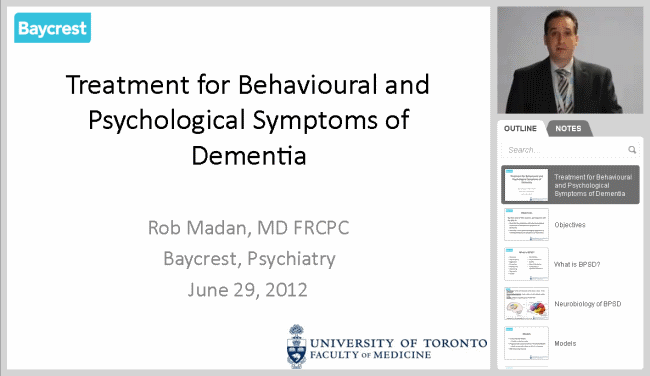
As part of our Lecture Series, Dr. Robert Madan, the Chief Psychiatrist at Baycrest Geriatric Health Care System at the University of Toronto, gives an engaging talk on Treatment for Behavioral and Psychological Symptoms of Dementia.

Dr. Barry Goldlist sat down for an interview with Dr. Charles Lynde, the Editor-in-Chief of Dermatology Educational Resource.

Our choice of topic to present as an infographic is Lumbar Spinal Stenosis, a condition we review as part of the larger scope of Back Pain for which we are developing a blended CME program that is scheduled for release later this year.

I hope you enjoy the issue as much as I enjoyed reviewing for you. As always, comments and questions are welcomed. I hope you are enjoying the Summer season!

The Launch of the Dermatology Educational Resource: Interview With the Editor-in-Chief Dr. Charles Lynde

The Launch of the Dermatology Educational Resource: Interview With the Editor-in-Chief Dr. Charles Lynde

Teaser: 


Charles Lynde, MD, FRCPC
Editor-in-Chief for the Dermatology Educational Resource @HealthPlexus and the Journal of Current Clinical Care.

Following on the footsteps of the recent announcement of the launch of the Dermatology Educational Resource, www.HealthPlexus.net recently interviewed Dr. Charles Lynde who was appointed as Editor-in-Chief for the newly re-focused educational channel. Dr. Barry Goldlist asked Dr. Lynde a few questions about the format and the plans for this project.

Treatment for Behavioral and Psychological Symptoms of Dementia

Treatment for Behavioral and Psychological Symptoms of Dementia

Teaser: 

Dr. Robert Madan is currently the Acting Psychiatrist-in-Chief, Executive Medical Director for the Centre for Mental Health and the Medical Program Director for the Psychiatric Day Hospital at Baycrest.

Learning Objectives
By the end of the session, participants will be able to:
- Describe the problems with pharmacological treatment of behavioral symptoms of dementia;
- Describe a non-pharmacological approach to treating behavioral symptoms of dementia.

Keywords: dementia, behaviour, agitation
 

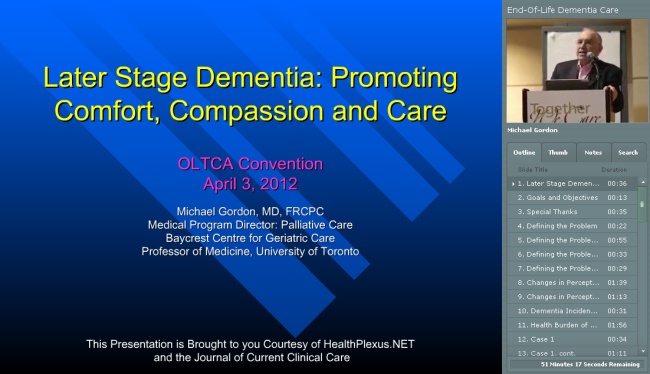
Later Stage Dementia: Promoting Comfort, Compassion and Care

Later Stage Dementia: Promoting Comfort, Compassion and Care

Teaser: 

Michael Gordon, MD, MSc, FRCPC, Medical Program Director, Baycrest Geriatric Health Care System; Professor of Medicine, University of Toronto, Toronto, ON.
 

Learning Objectives

When it comes to dementia much of the focus is related to diagnosis and treatment(s). A terminal phase is not always considered with conditions that cause dementia-but must be to properly plan care.

To address clinical and ethical challenges that face health care providers and families for this population and to provide health care providers with processes by which to address such ethical dilemmas.

Keywords: dementia, caregiving, end-of-life planning

Dermatology Editorial Team Joins HealthPlexus and JCCC

Dermatology Editorial Team Joins HealthPlexus and JCCC

Teaser: 

I
have the pleasure of introducing the latest edition of the Journal Of Current Clinical Care. As always there are a multitude of noteworthy developments to report and
a variety of interesting and clinically relevant topics that are covered in this issue.

As hinted in my last editorial, I am pleased to welcome Dr. Charles Lynde as Editor-in-Chief for the Dermatology Educational Resource @HealthPlexus and the Journal of Current Clinical Care. Dr. Lynde with the help of his fellow editors Drs. Anne
Goodfellow
, John Kraft and Francesca Cheung, will spearhead a Dermatology
section on www.healthplexus.net and the Journal of Current Clinical Care. For this edition, Shahana Nathwani and Dr. Joseph Lam from the University of British Columbia provide an approach to ‘lumps and bumps’ in the pediatric population. There are
a number of conditions that present clinically as ‘lumps and bumps’ in this age group.
Some of these follow a benign course and can be safely observed, and others are more
concerning and require definitive therapy and may even result in serious complications.
A helpful feature of the article is a practice helper tool: A menu of cutaneous lesions in
the pediatric population categorized according to colour.

I am also happy to introduce our new department called Infographics. Going
forward we will select a topic and present the information and facts in an exciting and
visually informative format. In this issue our choice of condition to present as an infographic is Ulcerative Colitis, an important topic for which we are also developing a
CME program that is scheduled for release later this year.

Another first that we are introducing in this issue is a Lecture Series department.
Dr. Michael Gordon, the Medical Program Director at Baycrest Geriatric Health
Care System at the University of Toronto, is one our regular contributors, and is the
Editor-in-Chief of our Dementia Educational Resource, gives an engaging talk on Later
Stage Dementia and focusing on Promotion of Comfort, Compassion and Care
, complete with video and slides.

Also in this issue, Dr. Michael Gordon in his article When to Have the Critical
Conversation? Issues in Planning for Persons with Dementia and their Caregivers
,
uses a poignant family vignette to remind us that as health care providers we should
encourage families and our patients to initiate conversations early regarding treatment
at the end of life.

Drs. Lovingly Quitania Park and Sarah Tomaszewski Farias from the
Department of Neurology at the University of California at Davis review the concept of
Functional Limitations Predict Future Decline in Mild Cognitive Impairment (MCI).
MCI is a term used to describe a transitional stage between normal aging and dementia.
In MCI there are subtle changes in everyday activities that may indicate the presence
of an under lying neurodegenerative condition, however patient independence is maintained. The authors review how to assess for cognitive impairment in this population
and the prognostic implications of on subsequent conversion to dementia and the rate
of progression of dementia.

The effects of caregiver burden are often expressed as a decline in psychological and
physical health, as well as an increase in physician visits. In the article, Identifying and
Managing Caregiver Burden Among Spouses of Individuals with Parkinson’s Disease
Dr. Andrew Johnson et al., examines some of the predictors of caregiver burden,
with a specific emphasis on the burden experienced by caregivers of individuals with
Parkinson’s disease. Helpful strategies for relieving caregiver burden are also reviewed.

I hope you enjoy this edition of the journal. As always, your comments and questions are welcomed.

The Importance of Healthy Skin

The Importance of Healthy Skin

Teaser: 

Skin is the body’s largest organ. It acts as a protective layer between the insides and the rest of the world, helps regulate body temperature, acts as a natural filter and is constantly growing. It’s affected by every aspect of our life, by what we eat and the environment. Skin that is healthy is able to resist signs of aging, heals faster and can even stave off potential disease. It often manifests some underlying diseases and when it’s visually altered or damaged can make a profound effect on one’ quality of life.

As the newly appointed Editor-in-Chief for the Dermatology Educational Resource @HealthPlexus and the Journal of Current Clinical Care and with the help of my fellow editors Drs. Anne Goodfellow, John Kraft, and Francesca Cheung, we will solicit, organize and present to you educational materials of relevance to primary care practitioners and specialists alike by asking for contributions from recognized Key Opinion Leaders in the field of Dermatology on evidence-based best practices and treatment options.

In this issue, we are featuring the first article in our dermatology section titled Common Lumps and Bumps in Children: A Colour-coded Differential. Dr. Joseph Lam and Shahana Nathwani examine the many conditions that present as ‘lumps and bumps’ in the pediatric population. While some follow a benign course, others require definitive therapy or carry the potential for serious complications. Their review presents and categorizes common pediatric cutaneous lesions according to colours as a tool to help the general practitioner recognize and remember these lesions.

If you have questions, interested in serving as a contributor or peer-reviewer please reach out to us at contactus@healthplexus.net

I hope you enjoy this issue of the Journal. Feedback and discussion, as always, is welcomed.

2012 Canadian Consensus Conference on Dementia

2012 Canadian Consensus Conference on Dementia

Teaser: 

On May 4th and 5th the fourth Canadian Consensus Conference on the Diagnosis and Treatment of Dementia (CCCDTD4) took place in Montreal. First started in 1989, the goal of the conference and its contributors, participants and authors is to review the evidence on various critical aspects of dementia and produce a series of papers summarizing the evidence. After the papers are written by a team of physician experts in the field of study, then are posted on the consensus website and conference participants are invited to add comments, then vote on a series of recommendations which are formulated by the authors, based on the best available evidence that can be gleaned from the English and French language medical literature.

The conference is attended by the papers’ authors, the steering committee of the conference and delegates from across Canada representing as much as possible all the fields addressed by the papers. This resulted in 27 attendees at the Montreal conference, from neurology, geriatric psychiatry, geriatric medicine, care of the elderly family medicine, genetics, neuroimaging and the major organizations that deal with those populations often living with or at risk for dementia that included the Canadian Academy of Geriatric Psychiatry, Canadian Geriatrics Society, College of Family Physicians of Canada and the Alzheimer’s Society.

The topics chosen for the focus of the papers from which evidence was gleaned to formulate the many recommendations were divided into the following categories: Definitions, Pharmacology and Therapeutics, Neuroimaging, Rapidly Progressive Dementia, Liquid Biomarkers, Early Onset Dementia, Knowledge translation in Dementia and Translation into Primary Care. As can be seen from the list, not every conceivable component of dementia care was covered, but those areas that are dependent on a body of literature from which evidence as to the consistency, efficacy and outcomes could be reasonably gleaned were the primary focus of the conference as has been the case in the past. When there was nothing new from the literature, we endorsed previous recommendations. For example, we did not recommend any changes to the laboratory work up for all cases of suspected dementia. There was also recognition that the areas chosen for review have a substantial impact on the practice of dementia-related medical care and public health care policy. All the papers were also explored for the ethical and resource allocation impact of the proposed recommendations.

At the end of each paper presentation by one or more of the authors, the results of the online voting was reviewed. Further, robust and far-reaching discussion of the recommendations often resulted in some modifications of the wording or conclusions. The strength of the recommendations (strong, weak) and levels of supporting evidence (A= most persuasive, B= moderate, C= weakest) resulted in suggestions for practice that were then subjected to the conference participants’ final vote. While most recommendations reached consensus agreement, some were rejected as being inappropriate or not supported by sufficient evidence.

The next step is that the results of the conference and the final recommendations will be submitted to a number of journals directed to the whole spectrum of physicians involved in dementia care. This includes primary care physicians, specialist physicians both community-based and academic, of which the latter often function within the milieu of tertiary level memory and dementia programs and clinics.

After the recommendations are published in the medical literature, HealthPlexus will play an important role in the dissemination and the process of translation of the recommendations into clinical practice with the goal of assisting primary care physicians in the evaluation, investigation, and care of their patients afflicted with the wide range of cognitive impairments, and the caregivers and families who support them. We will endeavour to help family physicians through various modalities of presentations including the possibility of case-based presentations that can be addressed through the lens of the new recommendations so that our HealthPlexus readership can assimilate the new recommendations into the very practical challenges of primary care.

As the editor of the dementia section of HealthPlexus, and member of the steering committee, and ethics consultant to the Consensus conference, I am very pleased that we can play an active role in helping front-line primary care physicians utilize the recommendations of the Conference to guide the every day challenges of their practice.

Michael Gordon, MD, MSc, FRCPC
Editor-in-Chief, Dementia Educational Resource
www.healthplexus.net and the Journal of Clinical Care
and
Member of CCCDTD2012 Steering Committee
Ethics Consultant to the Committee


About Health Plexus:
Comprised of 1000s of clinical reviews, CMEs, bio-medical illustrations and animations and other resources, all organized in the 34 condition zones, our vision is to provide physicians and allied healthcare professionals with access to credible, timely and multi-disciplinary continuing medical education from anywhere and on any media consumption device. The Dementia Educational Resource is the compilation of high quality clinical reviews, online CME programs, library of original visual aids, interviews, roundtable discussions and related conference reports.


Common Lumps and Bumps in Children: A Colour-coded Differential

Common Lumps and Bumps in Children: A Colour-coded Differential

Members of the College of Family Physicians of Canada may claim one non-certified credit per hour for this non-certified educational program.

Mainpro+® Overview
Teaser: 

Shahana Nathwani, BHK, Faculty of Medicine, University of British Columbia, Vancouver, BC.
Joseph M Lam, MD, FRCP(C), Clinical Assistant Professor, Department of Pediatrics, Associate Member, Department of Dermatology and Skin Sciences, University of British Columbia, Vancouver, BC.

Abstract
Many conditions present as 'lumps and bumps' in the pediatric population. Some follow a benign course and can be safely observed with parental education and reassurance. Others require definitive therapy or carry the potential for serious complications. Understanding and recognizing the different lesions will help guide the care, counseling and management of patients with these common 'lumps and bumps'. This review presents and categorizes common pediatric cutaneous lesions according to colours as a tool to help the general practitioner recognize and remember these lesions.
Keywords: benign; pediatric; tumours; vascular; hemangioma; nevus.

Thoughts on the WHO's Dementia Report

Thoughts on the WHO's Dementia Report

Teaser: 

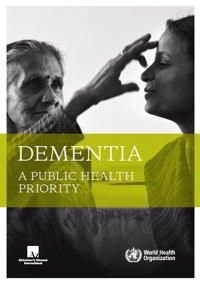
It is a positive step for all of us trying to care for those living with dementia and their families to learn that the World Health Organization (WHO) has produced a far-reaching report outlining the world-wide challenge faced by nations whose populations will be affected by increasing numbers of those afflicted with Alzheimer's disease and other causes of dementia. The report entitled, "Dementia: A Public Health Priority",  gives a world-wide perspective and reiterates the already known Canadian statistics which estimates about half a million people living with some sort of dementia in 2010 with an estimated increase to 1.1 million by 2025 if nothing dramatic happens in terms of preventative treatments over the coming years.

One of the comments that caught the eye of the media about Canada's approach is that unlike Australia, Denmark, France, Japan, Korea, the Netherlands, Norway and the United Kingdom which all have some sort of a national strategy for dementia, Canada does not.  This apparent lack by the Canadian federal government became a focus for criticism by many Canadian organizations including the Alzheimer Society of Canada which used the term, "a wake up call" to the federal government to take action.

WHO Dementia Report The problem in Canada with expecting the federal government to embark on a national strategy is that unlike the nations cited as having national strategies which in fact have national health services, Canada does not really have a national health service. Rather it has a nationally mandated framework for provincially run-health care systems under the umbrella legislation known as the Canada Health Act, often referred to as Canadian Medicare. In essence what Canada has are provincial health care systems, all of which share commonalities, but which differ enormously in the spectrum of services provided beyond the federally mandated (through the Canada Health Act) physician and hospital services. Therefore each province has its own approach to home care, long-term care, pharmacare, and family support systems for those experiencing a wide range of ailments of which dementia is just one of many that can have a devastating effect on individuals and their families.

We would like to hear from you:
I would like to submit a comment on this editorial
I have a Dementia-related question that I would like to address to the experts
 

This means that for there to be a meaningful and robust approach to the challenges of dementia from original and basic research to the clinical domains of care through the spectrum of stages and venues where care will be provided to the very late stages of dementia where palliative and end-of-life considerations become paramount, it will likely be at the individual provincial level. This will take place with local organizations including universities and their affiliated research centres and individual health care settings from acute to long-term care that will ultimately define, explore and experiment with the range of interventions that might be useful in either thwarting the disease or providing appropriate care and support to patients and their families.

The federal government can be of great assistance whether through a formal national 'strategy' or through extensions of already existing mechanisms by promoting and encouraging (which usually means funding) research across many domains of dementia scientific enquiry, from the basic science aspects, to pharmaceutical research to health care systems and delivery studies. It can also find ways to support the range of care provision aspects at the individual and organizational approaches again through funding, grants, tax incentives, and other levels that work at the federal level that augment, but do not conflict with the provincial mandates of providing care in the local jurisdictional level.

That dementia is a "ticking time bomb" is clear from the current statistics and the projections should nothing dramatic occur. But that can change with a combination of concerted effort, use of best brains and technologies and a modicum of good fortune in the world of research endeavors which often comes up with solutions either from expected or unexpected sources.

Canada and each of the provinces cannot ignore the implications of the WHO report and the impact that the factors outlined in the report will have on the populations living in the country. All ways possible must be found to support each of the provinces as they try to cope with the local challenges of their populations affected by the "ticking time bomb" through their own provincial initiatives along with close scrutiny of the world-wide evidence on novel approaches along with cooperation across all the provinces and the sectors within the country. Canadians deserve no less from their federal and provincial governments.

Michael Gordon, MD, MSc, FRCPC
Editor-in-Chief, Dementia Educational Resource
www.healthplexus.net and the Journal of Clinical Care


About Health Plexus:
Comprised of 1000s of clinical reviews, CMEs, bio-medical illustrations and animations and other resources, all organized in the 34 condition zones, our vision is to provide physicians and allied healthcare professionals with access to credible, timely and multi-disciplinary continuing medical education from anywhere and on any media consumption device. The Dementia Educational Resource is the compilation of high quality clinical reviews, online CME programs, library of original visual aids, interviews, roundtable discussions and related conference reports.