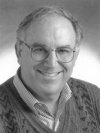
Author Bios

Articles by this author:

  • On May 4th and 5th the fourth Canadian Consensus Conference on the Diagnosis and Treatment of Dementia (CCCDTD4) took place in Montreal. First started in 1989, the goal of the conference and its contributors, participants and authors is to review the evidence on various critical aspects of dementia and produce a series of papers summarizing the evidence. After the papers are written by a team of physician experts in the field of study, then are posted on the consensus website and conference participants are invited to add comments, then vote on a series of recommendations which are formulated by the authors, based on the best available evidence that can be gleaned from the English and French language medical literature.

    The conference is attended by the papers’ authors, the steering committee of the conference and delegates from across Canada representing as much as possible all the fields addressed by the papers. This resulted in 27 attendees at the Montreal conference, from neurology, geriatric psychiatry, geriatric medicine, care of the elderly family medicine, genetics, neuroimaging and the major organizations that deal with those populations often living with or at risk for dementia that included the Canadian Academy of Geriatric Psychiatry, Canadian Geriatrics Society, College of Family Physicians of Canada and the Alzheimer’s Society.

    The topics chosen for the focus of the papers from which evidence was gleaned to formulate the many recommendations were divided into the following categories: Definitions, Pharmacology and Therapeutics, Neuroimaging, Rapidly Progressive Dementia, Liquid Biomarkers, Early Onset Dementia, Knowledge translation in Dementia and Translation into Primary Care. As can be seen from the list, not every conceivable component of dementia care was covered, but those areas that are dependent on a body of literature from which evidence as to the consistency, efficacy and outcomes could be reasonably gleaned were the primary focus of the conference as has been the case in the past. When there was nothing new from the literature, we endorsed previous recommendations. For example, we did not recommend any changes to the laboratory work up for all cases of suspected dementia. There was also recognition that the areas chosen for review have a substantial impact on the practice of dementia-related medical care and public health care policy. All the papers were also explored for the ethical and resource allocation impact of the proposed recommendations.

    At the end of each paper presentation by one or more of the authors, the results of the online voting was reviewed. Further, robust and far-reaching discussion of the recommendations often resulted in some modifications of the wording or conclusions. The strength of the recommendations (strong, weak) and levels of supporting evidence (A= most persuasive, B= moderate, C= weakest) resulted in suggestions for practice that were then subjected to the conference participants’ final vote. While most recommendations reached consensus agreement, some were rejected as being inappropriate or not supported by sufficient evidence.

    The next step is that the results of the conference and the final recommendations will be submitted to a number of journals directed to the whole spectrum of physicians involved in dementia care. This includes primary care physicians, specialist physicians both community-based and academic, of which the latter often function within the milieu of tertiary level memory and dementia programs and clinics.

    After the recommendations are published in the medical literature, HealthPlexus will play an important role in the dissemination and the process of translation of the recommendations into clinical practice with the goal of assisting primary care physicians in the evaluation, investigation, and care of their patients afflicted with the wide range of cognitive impairments, and the caregivers and families who support them. We will endeavour to help family physicians through various modalities of presentations including the possibility of case-based presentations that can be addressed through the lens of the new recommendations so that our HealthPlexus readership can assimilate the new recommendations into the very practical challenges of primary care.

    As the editor of the dementia section of HealthPlexus, and member of the steering committee, and ethics consultant to the Consensus conference, I am very pleased that we can play an active role in helping front-line primary care physicians utilize the recommendations of the Conference to guide the every day challenges of their practice.

    Michael Gordon, MD, MSc, FRCPC
    Editor-in-Chief, Dementia Educational Resource
    www.healthplexus.net and the Journal of Clinical Care
    and
    Member of CCCDTD2012 Steering Committee
    Ethics Consultant to the Committee


    About Health Plexus:
    Comprised of 1000s of clinical reviews, CMEs, bio-medical illustrations and animations and other resources, all organized in the 34 condition zones, our vision is to provide physicians and allied healthcare professionals with access to credible, timely and multi-disciplinary continuing medical education from anywhere and on any media consumption device. The Dementia Educational Resource is the compilation of high quality clinical reviews, online CME programs, library of original visual aids, interviews, roundtable discussions and related conference reports.

Blogs by this author:

  • Often in a geriatric medicine practice one of the salient complaints by families is how often their loved one tells them the same thing over and over again.

    Dr. Michael Gordon is currently medical program director of Palliative Care at Baycrest, co-director of their ethics program and a professor of Medicine at the University of Toronto. He is a prolific writer with his latest book Late-Stage Dementia: Promoting Comfort, Compassion, and Care and previous two books being Moments that Matter: Cases in Ethical Eldercare followed shortly on his memoir: Brooklyn Beginnings-A Geriatrician’s Odyssey. For more information log on to www.drmichaelgordon.com

  • I am reading the biography of a well-known author. Like other biographies, one of the wonderful aspects of such writing is appreciating those people who have had a profound influence on the life of the person whose biography is being read...

    Dr. Michael Gordon is currently medical program director of Palliative Care at Baycrest, co-director of their ethics program and a professor of Medicine at the University of Toronto. He is a prolific writer with his latest book Late-Stage Dementia: Promoting Comfort, Compassion, and Care and previous two books being Moments that Matter: Cases in Ethical Eldercare followed shortly on his memoir: Brooklyn Beginnings-A Geriatrician’s Odyssey. For more information log on to www.drmichaelgordon.com

  • I recently saw the movie, The Iron Lady that looks at the developmental and political life of...

    Dr. Michael Gordon is currently medical program director of Palliative Care at Baycrest, co-director of their ethics program and a professor of Medicine at the University of Toronto. He is a prolific writer with his latest book Late-Stage Dementia: Promoting Comfort, Compassion, and Care and previous two books being Moments that Matter: Cases in Ethical Eldercare followed shortly on his memoir: Brooklyn Beginnings-A Geriatrician’s Odyssey. For more information log on to www.drmichaelgordon.com

  • Dementia poses many difficult challenges and choices to those living with the condition...

    Dr. Michael Gordon is currently medical program director of Palliative Care at Baycrest, co-director of their ethics program and a professor of Medicine at the University of Toronto. He is a prolific writer with his latest book Late-Stage Dementia: Promoting Comfort, Compassion, and Care and previous two books being Moments that Matter: Cases in Ethical Eldercare followed shortly on his memoir: Brooklyn Beginnings-A Geriatrician’s Odyssey. For more information log on to www.drmichaelgordon.com

  • Hearing impairment is a common phenomenon in the older population...

  • The closest I came to Egypt was the Sinai Peninsula...

  • I looked at the certificate that came as registered mail in early December 1981. I already knew that ...